Our history.
Worldwide campaign.
The Hunger Project Netherlands was founded more than 45 years ago, inspired by the American movement. Since then, The Hunger Project has invented itself over and over again to meet all the challenges on its way to a world without hunger. Always looking for the answer to that one question: what could make the difference to a world without hunger?
1 December 1980 The Hunger Project Netherlands was launched. Inspired by the American movement, The Hunger Project Netherlands was part of a global campaign on hunger. Dozens of volunteers were talking on the street about the . A world without hunger is feasible. They picked up thousands of signatures.
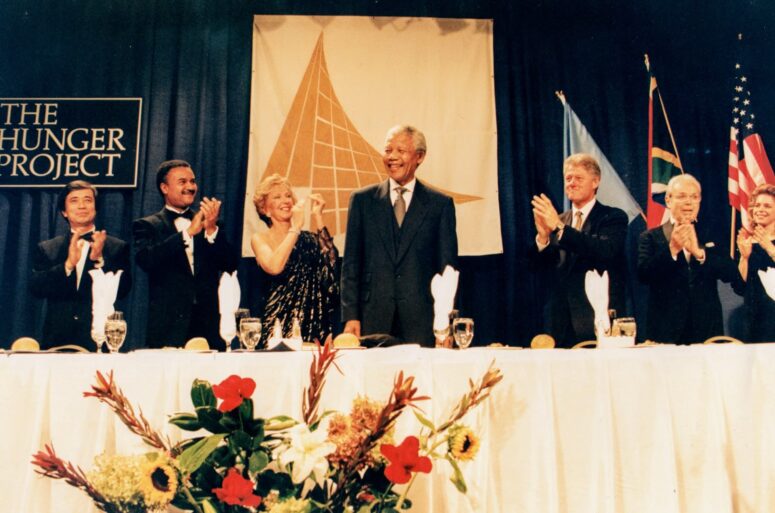
In those first years, we investigated what steps were needed to make a real difference. We contributed to ending the famine in Cambodia and Somalia, worked on Live Aid and founded the Africa Prize for Leadership for the Sustainable End of Hunger. From 1987 we started our first programs: First in Mexico and India, then in Bangladesh, Senegal, Ghana, Benin, Burkina Faso, Malawi, Uganda, Ethiopia, Mozambique and Zambia.
Volunteer organisation in the Netherlands.
During the 1990s, active groups of volunteers organised actions throughout the Netherlands (but mainly in Friesland and Limburg): information in schools, inspiration meetings and events related to the announcement of the Africa Prize for Leadership.
Grassroots organization.
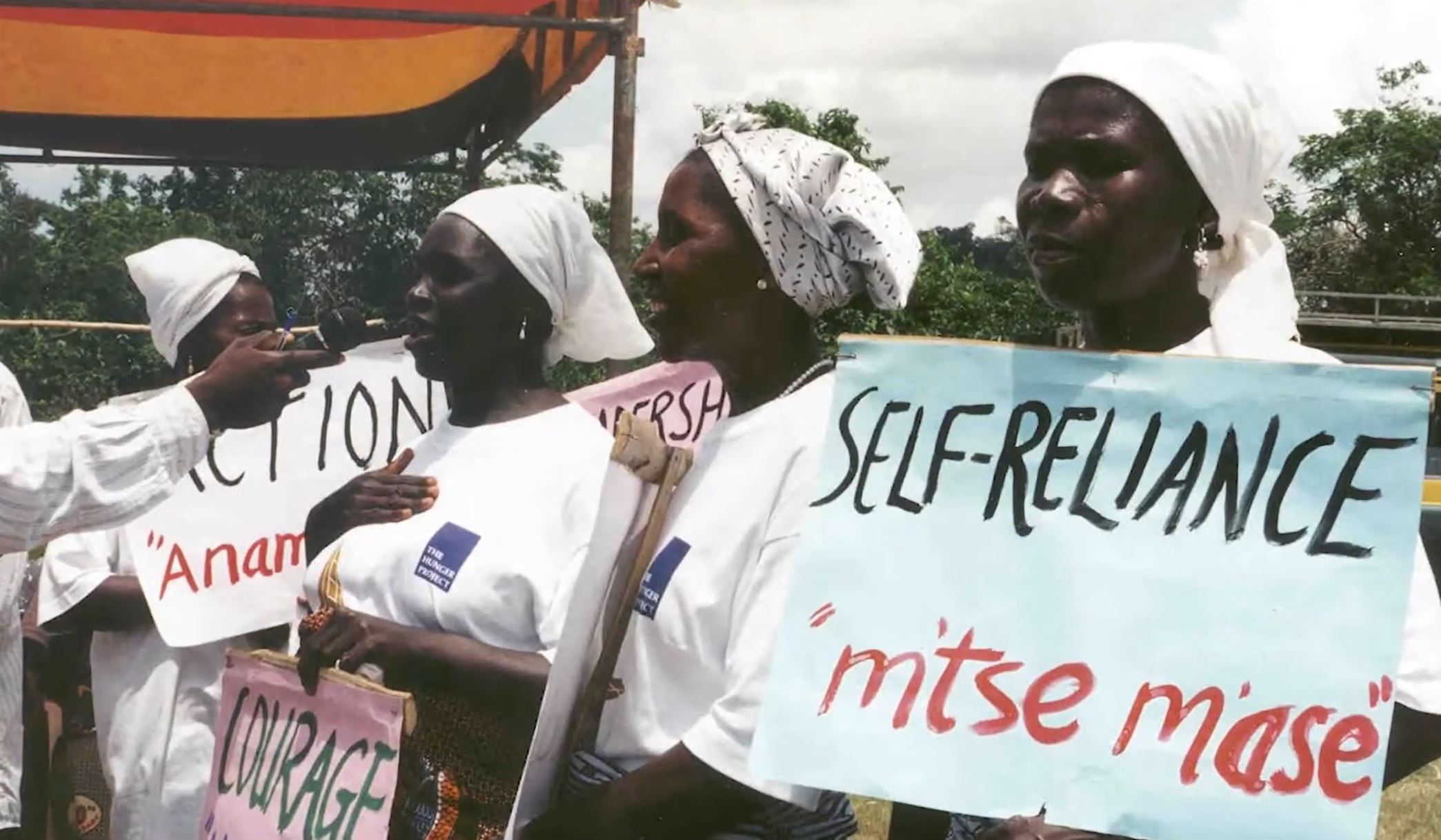
Meanwhile, we learned more and more about sustainable solutions to hunger. Thus it became increasingly clear that charity and a top-down approach do not work in the long term. That is why we decided, as one of the first organisations, to direct their own future with people themselves. So that hunger can be tackled from the bottom and from the inside. We became a grassroots organisation.
Pioneers.
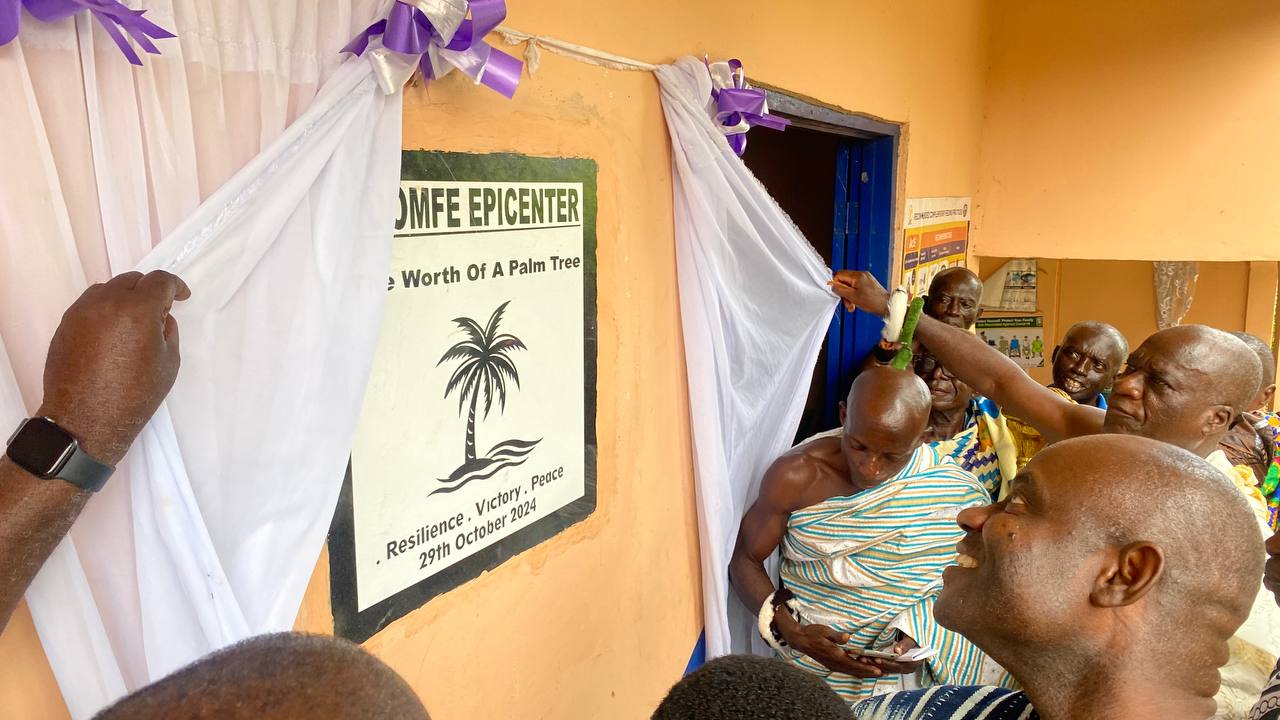
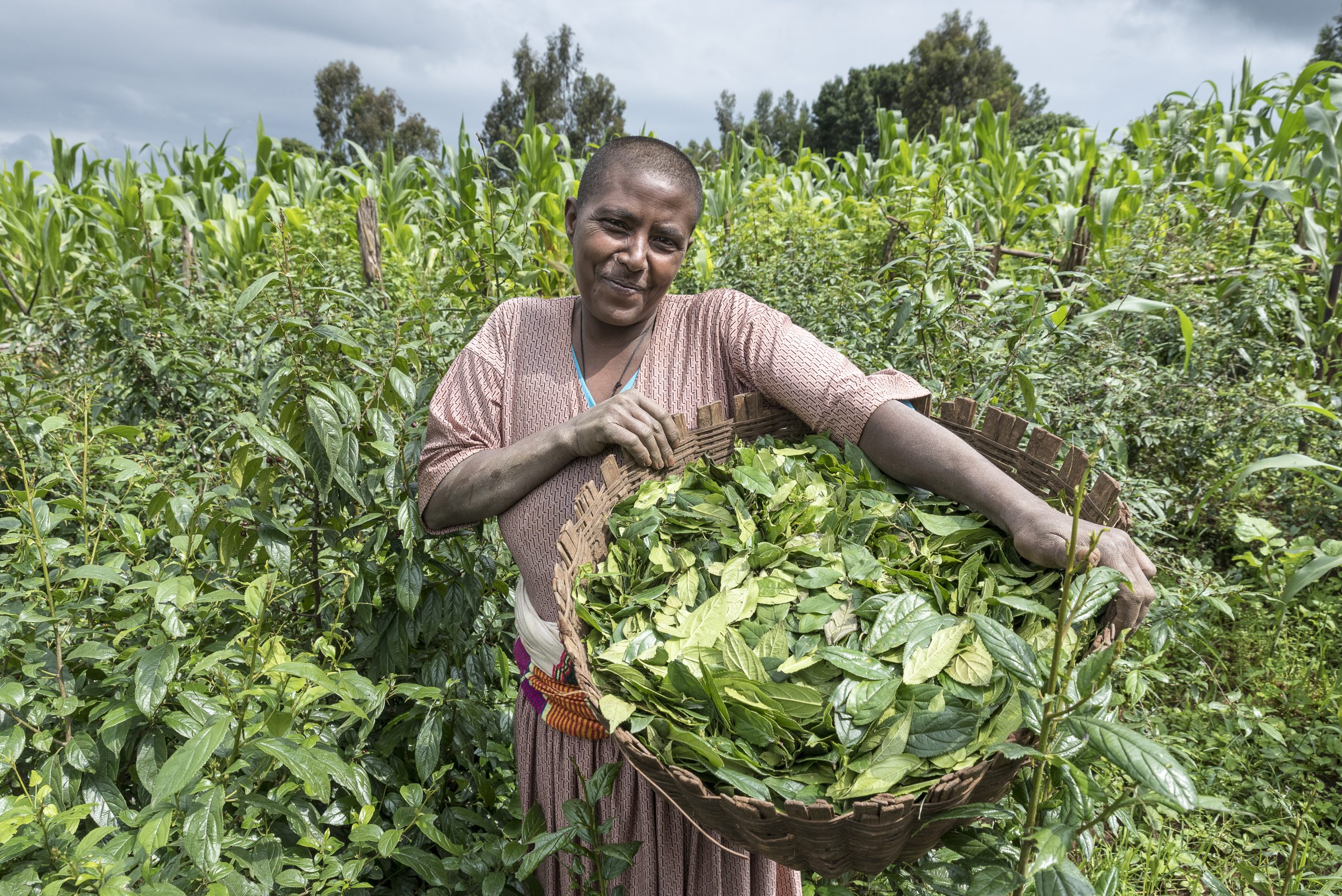
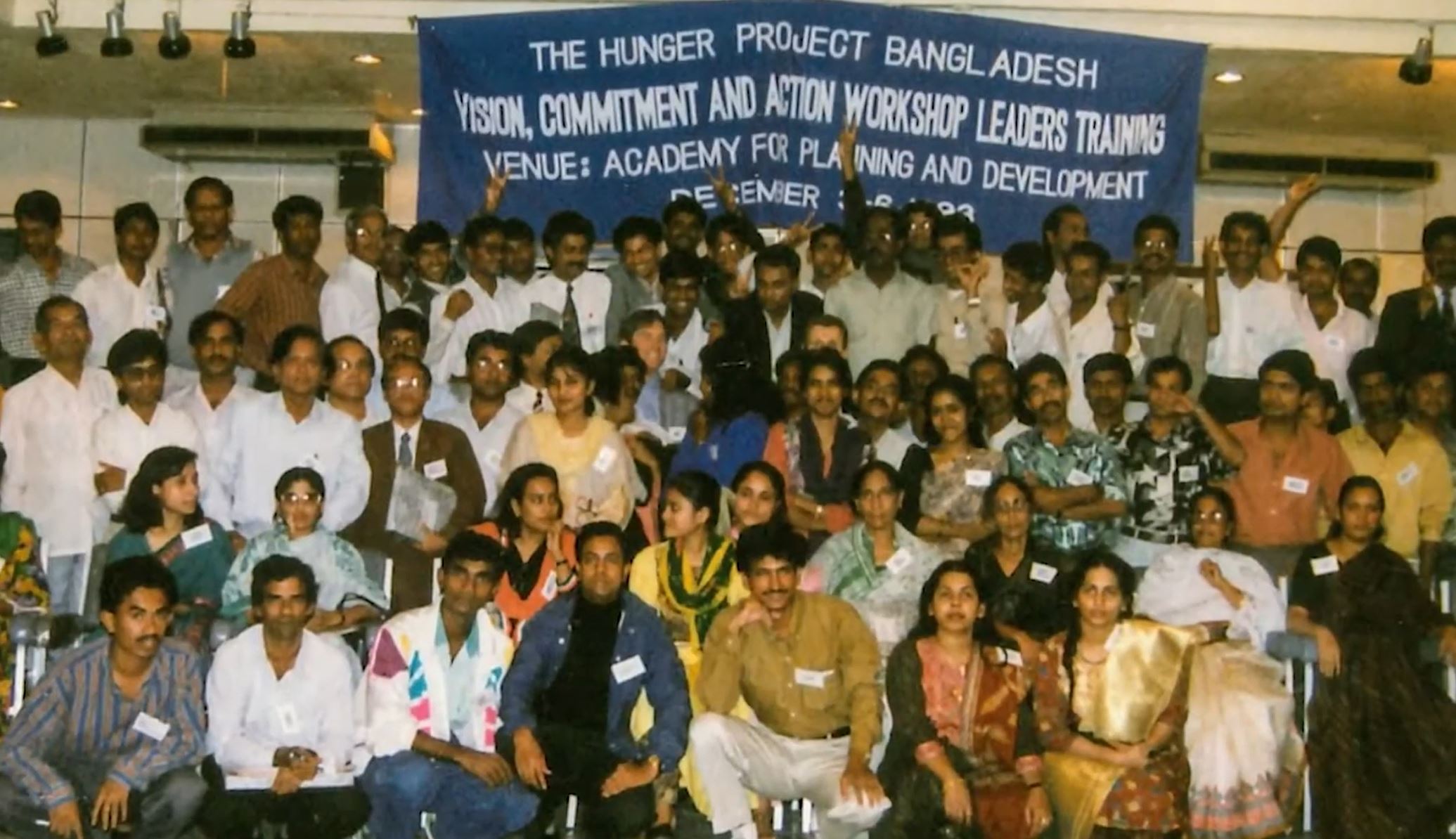
The Hunger Project pioneered between 1990 and 2000 with new grassroots approaches in which people are central. Like itAfrican Woman Food Farmer InitiativeTargeted at female farmers. And oneIndia leadership programme for women and local democracy. We campaigned worldwide to draw attention to these bottom-up, gender-focused strategies. Our Epicenter strategy “were celebrated in international Millennium Target Reports as a proven effective method to combat poverty and hunger.
Growth.
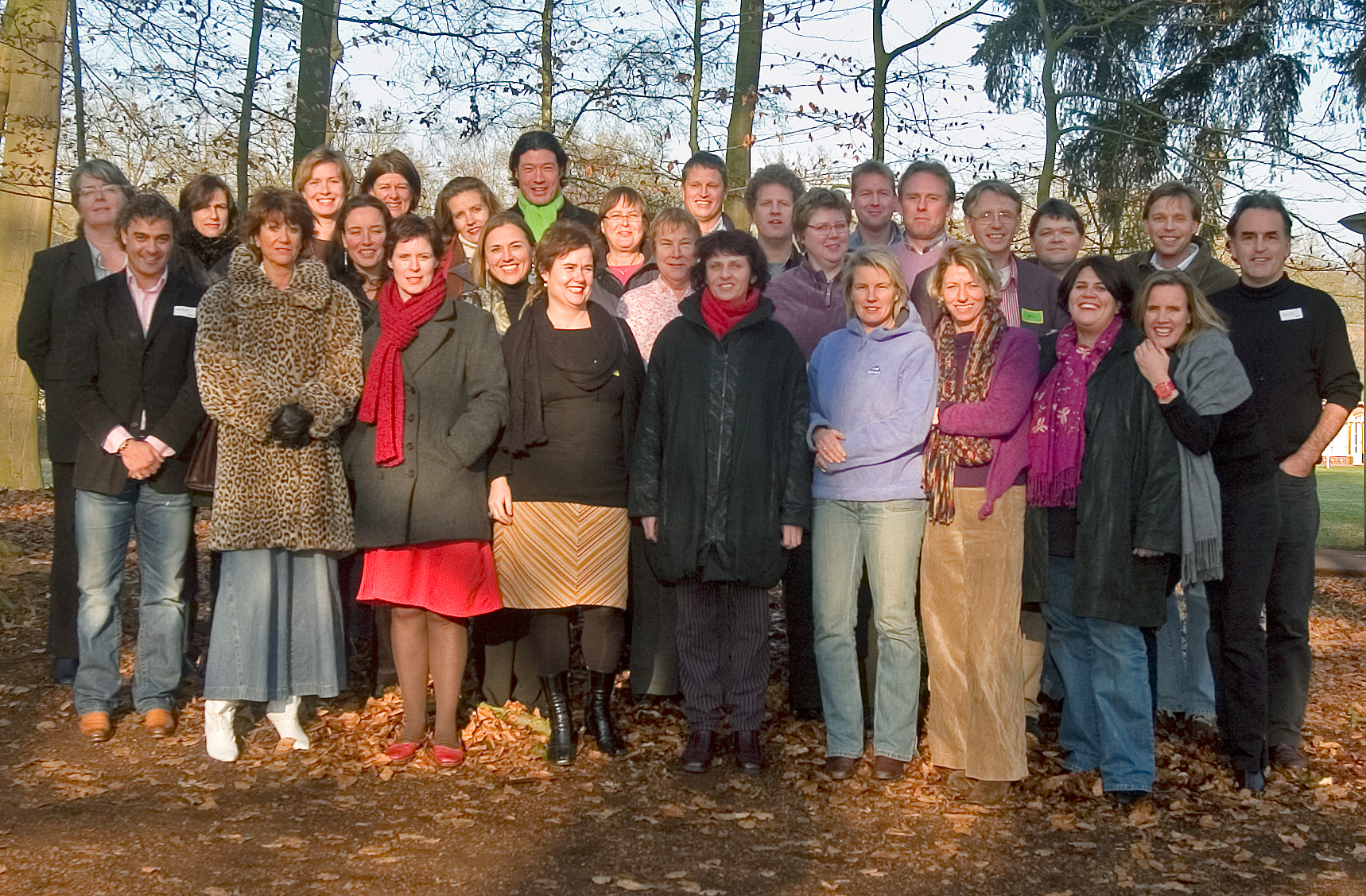
The Dutch organisation grew from a voluntary organisation to an increasingly professional organisation, with an office, a Committee of recommendations and strategic goals. More and more companies, foundations and individuals became deeply involved in our work. For they too were convinced: Together, we can put an end to hunger. Since 2008, our first investor networks have been established, with involved people who have been making a financial commitment to projects in Benin and India for years. Due to the great commitment of volunteers, sponsors and successful fundraising, revenue increased spectacularly from 2011 onwards and we could carry out more and more programmes against hunger. After years of dreaming we became benificient to the National Postal Code Lottery and there were government subsidies first for Her Choice, later for Right2Grow.
International cooperation.
On the SDG-summitlaunchedThe Hunger ProjectalsohairInternational Movement forcommunity-led development.Because we want to inspire as many other organisations, policy makers and financiers as possible to work from within and below. We bring together parties with the same mission and community-led approach. Theglobal movement exists now from 3,000+ local and community-based organisations, networks and 30 international NGOs from more than 40 countries whichlearn from each other and pull together.In addition,The Hunger Project Netherlands plays an increasingly important role within its international organisation.
Impact.
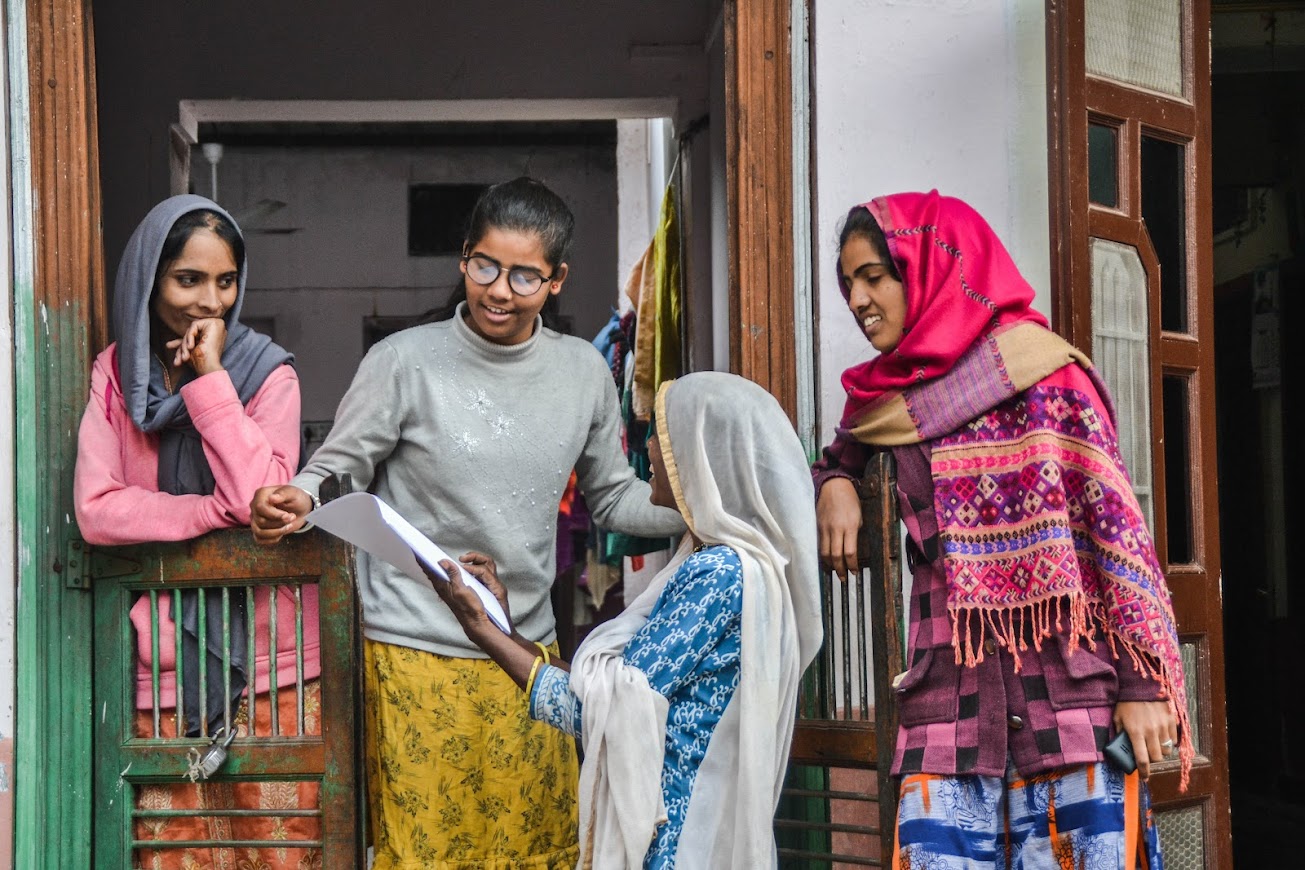
In 2015, the the first communitywithin our programsself-reliableexplained.At the moment the counter is on90self-rescue epicentres. We reach almost 13 million people in villages in rural Africa, South Asia and Latin America.We also trained more than 500,000 local volunteerswho continue to share their new knowledge with their surroundings and subsequent generations, and to advance their villages themselves. Over 45 yearssaw we stSwear it againprooffor our belief:A world without hunger is possible. AIs we working smartly together, persevere and put people with hunger at the centre?.