Opinion Irene Naikaali Ssentongo, Director The Hunger Project Uganda
I grow up in one of the famous slums of Kampala city. My home was that part of the city where poverty, hunger and crime were alive; but it is also where I learn to be creative, mature and compassionate.
Deep in my imagination, I always conceived a world without hunger. My earlier life prepared me to embrace challenges and turn them into opportunities that would open a door into a more sustainable future. A future where hungry was just a story to be told.Human nature thrives on sharing; There is enough for everyone irrespective of geographical boundaries. My mother dragged me this lesson earlier in life. She always shared the little food we had with neighbours. That to me was a humanist view of abundance. An excessive mindset that turns scarcity into opportunities.
But for too long, there has been. How can we expect individuals to win against hunger when the game has been rigged for so long?Here are a few examples that come to mind when I think about unustainable systems.
- Personal wealth is concentrated with just a tiny percent of an exploding world population;
- Population growth is higher in developing countries, while resource consumption and pollution is higher in developed countries;
- Climate change destroying food systems in Africa and Asia, while the global north create around a third of greenhouse gas emissions.
World Hunger Day was pioneered by The Hunger Project to enable that the world does not lose sight of the flight of our brothers and sisters bearing the Brunt of world hunger and poverty.According to the UN, 20% of Africa’s entire population is facing hungry right now.
But we also need to cause disruptions in long standing systems that are causing hungry to insist.
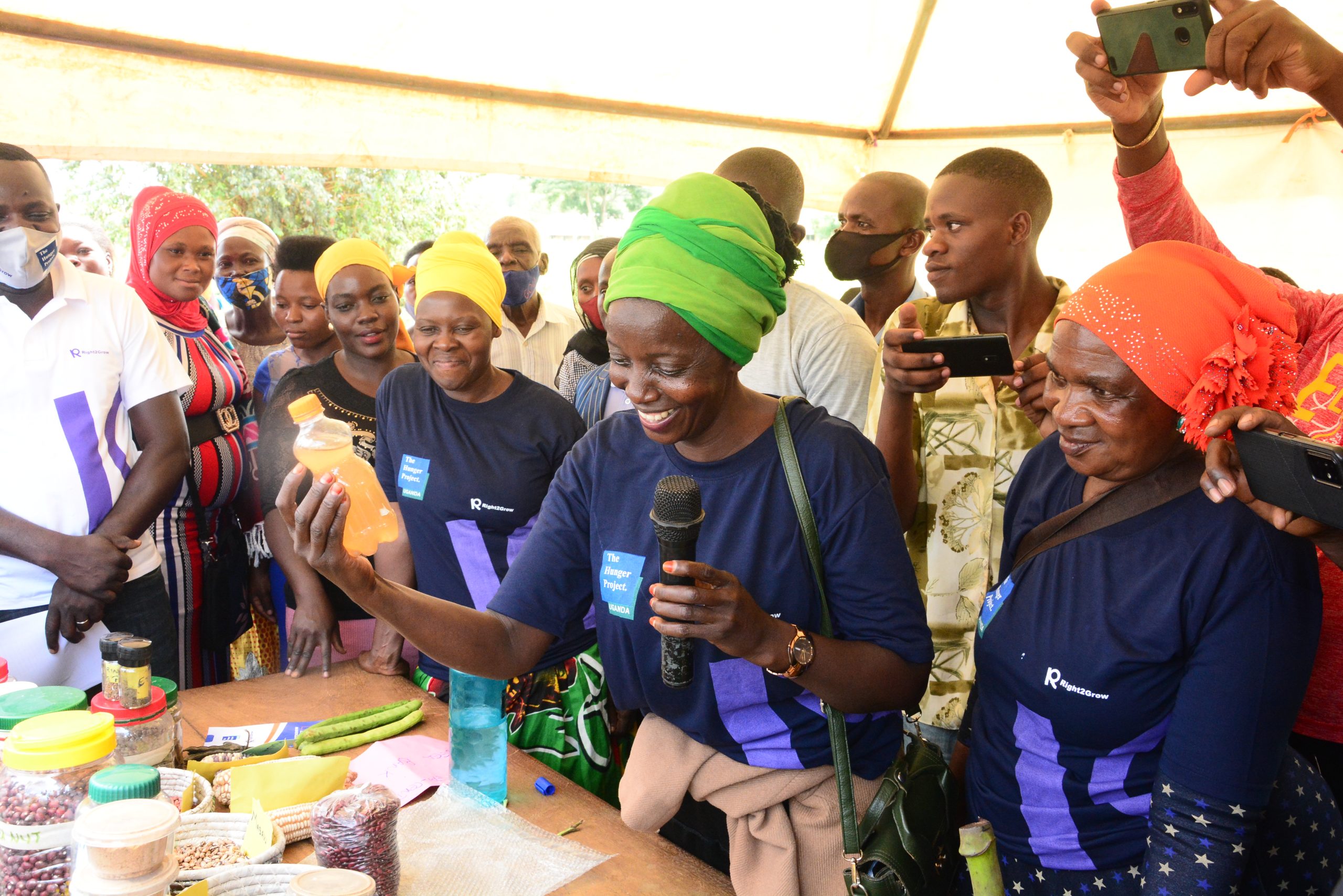
To end hungry, we see the benefits in amplifying local voices and leadership around sustainable food practices, such as growing local through the promotion of eco-friendly farming systems and promoting technology innovation to reduce food loss both on farm and during post-harmvest.
We are promoting the use of community seeds banks to prefer indigenous seed varieties as well as improve storage. We were promoting value addition to increase nutrient content in food, so that children may thrive. We were raising awareness around the importance of biodiversity in enabling productivity as well as working with communities to develop community adaptation plan to mitigate climate change impacts.
We believe this is how we create a world without hunger. It is a longer-term approach that requires ongoing investment but truly represents sustainability on a global scale.
More about World Hunger Day.
"Ending hunger is possible. I see the possibilities in my work every day, in the resilience and intelligence of people. But we also need to cause disruptions in long standing systems that are causing hungry to insist."
Irene Naikaali Ssentongo
The Hunger Project Uganda