People and Nature in Ethiopia.
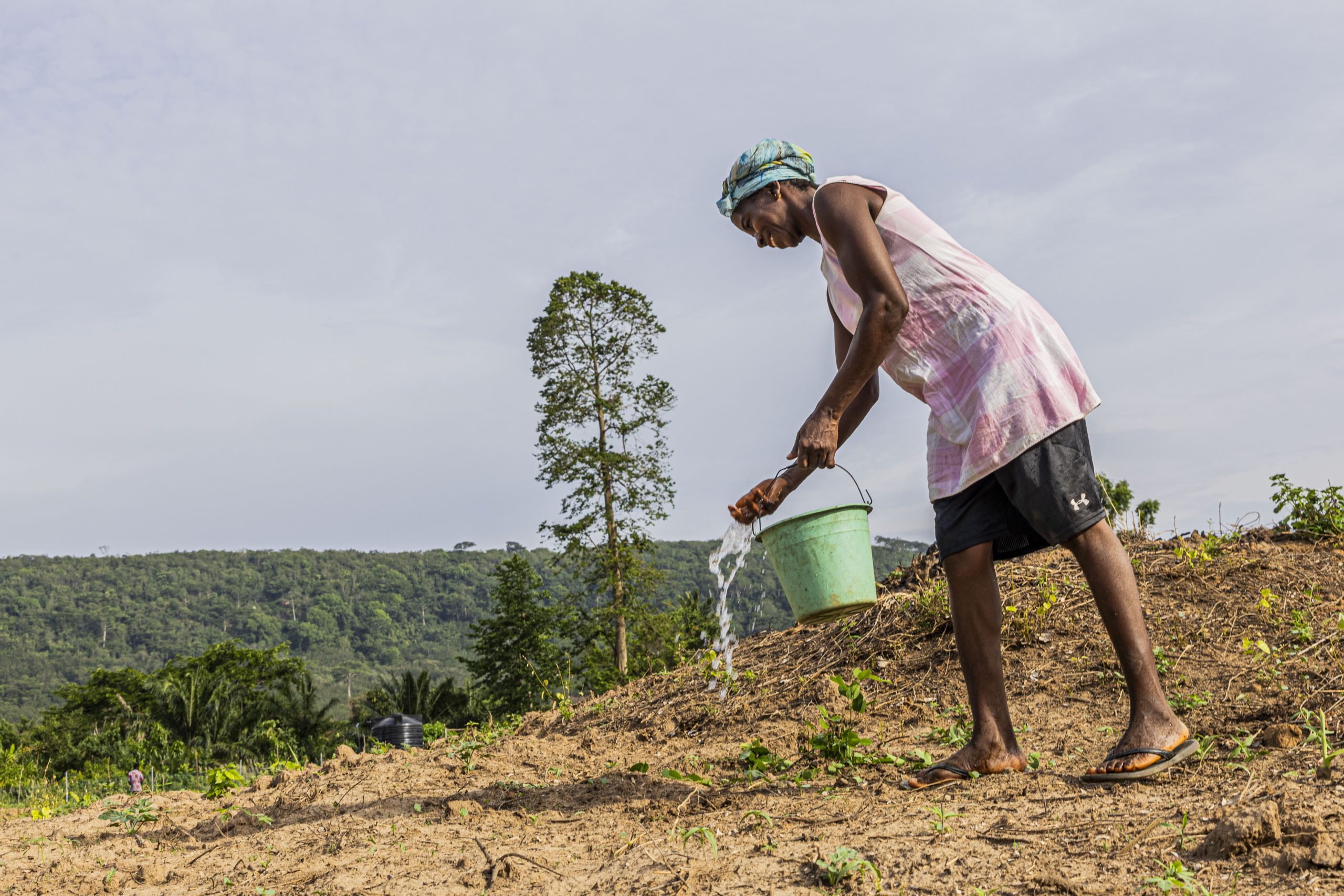
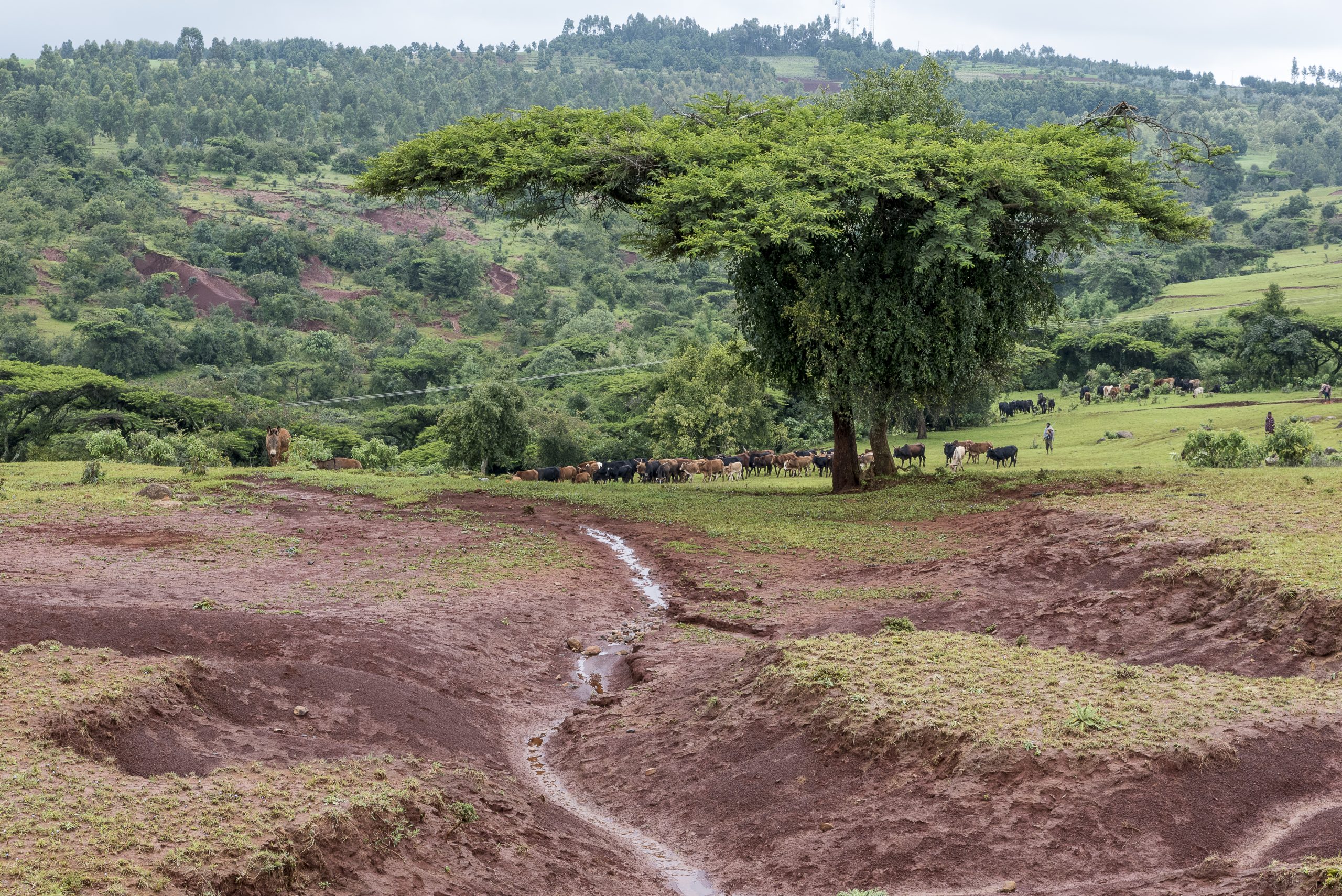
Gewocha in Ethiopia was once a thriving forest, rich in biodiversity. But today very little remains of the original old-growth forest, on which 42,000 people in 14 villages depend for their livelihoods. Over ten years (2022–2031), The Hunger Project is working with local residents to bring 10,000 hectares of Gewocha Forest back to life. We have two goals: to counter climate change by strengthening the area’s biodiversity, and to improve the community’s food security and standard of living.



Starting in Machakel.
Deforestation and erosion are a huge challenge in Ethiopia: the country loses 2 billion tonnes of fertile soil to land degradation every year. This loss of fertile soil leads to failed harvests and food insecurity. The effects of climate change make these problems worse and make it hard for local people to break the vicious cycle of hunger and poverty.
Between 2016 and 2019, The Hunger Project Ethiopia, WeForest and the local government worked together in Machakel, Ethiopia. The goal? To restore 1,200 hectares of degraded land. Using a community-led approach, nearly 2 million trees were planted, helping the soil and biodiversity to recover. At the same time, communities became more resilient to climate change, partly through alternative sources of income and climate-resilient farming. Hunger fell by a quarter. All farmers now use new farming techniques, and 91% of the community believe they can shape their own future.
Gewocha Forest.
Deforestation in Jabi Tehnan is causing fertile soil to be lost. Climate change is bringing increasingly severe droughts, extreme heat and storms, unpredictable rainfall and floods. As a result, fertile soil is washed away and the land becomes salinised. Erosion exhausts the soil, leading to failed harvests, food insecurity and lost income for local people.
Following the success in Machakel, we expanded our work with WeForest to Jabi Tehnan in the West Gojjam Zone. There, together with our partners A Bethter World, Caely Renewables, Jersey Overseas Aid and Meemaken, we are investing in the restoration of Gewocha Forest. And it is badly needed: half of the people in Jabi Tehnan live below the poverty line, and 43% are chronically malnourished. Women and children are hit hardest by poverty and hunger, and have little or no say in decisions in their household or community. On top of this, political and ethnic tensions have risen sharply in recent years as conflict has spilled over from neighbouring Tigray.
Getting to work.
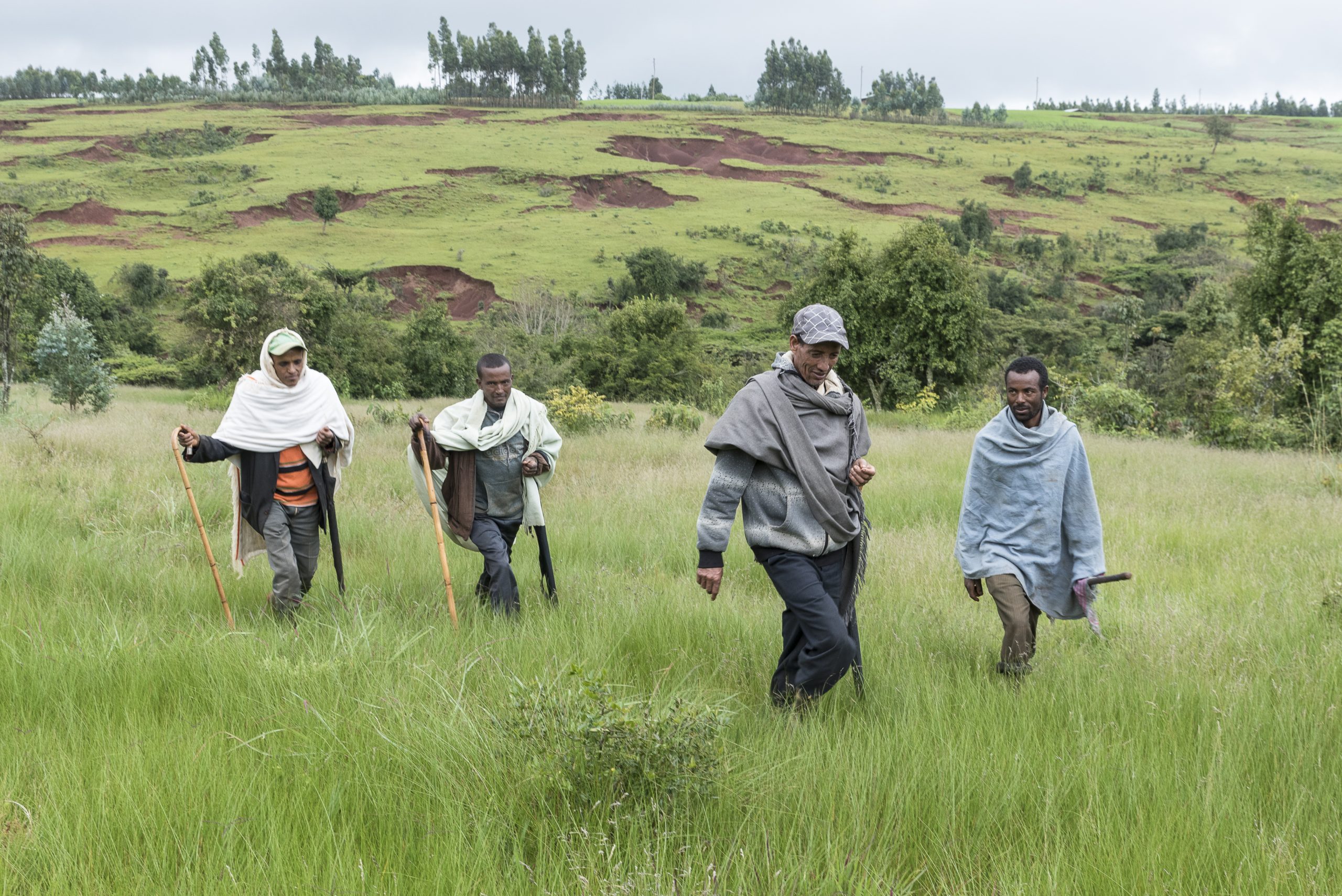
Together with local residents and WeForest, The Hunger Project is bringing Gewocha back to life. The 14 communities around Gewocha are working towards three goals:
Expanding.
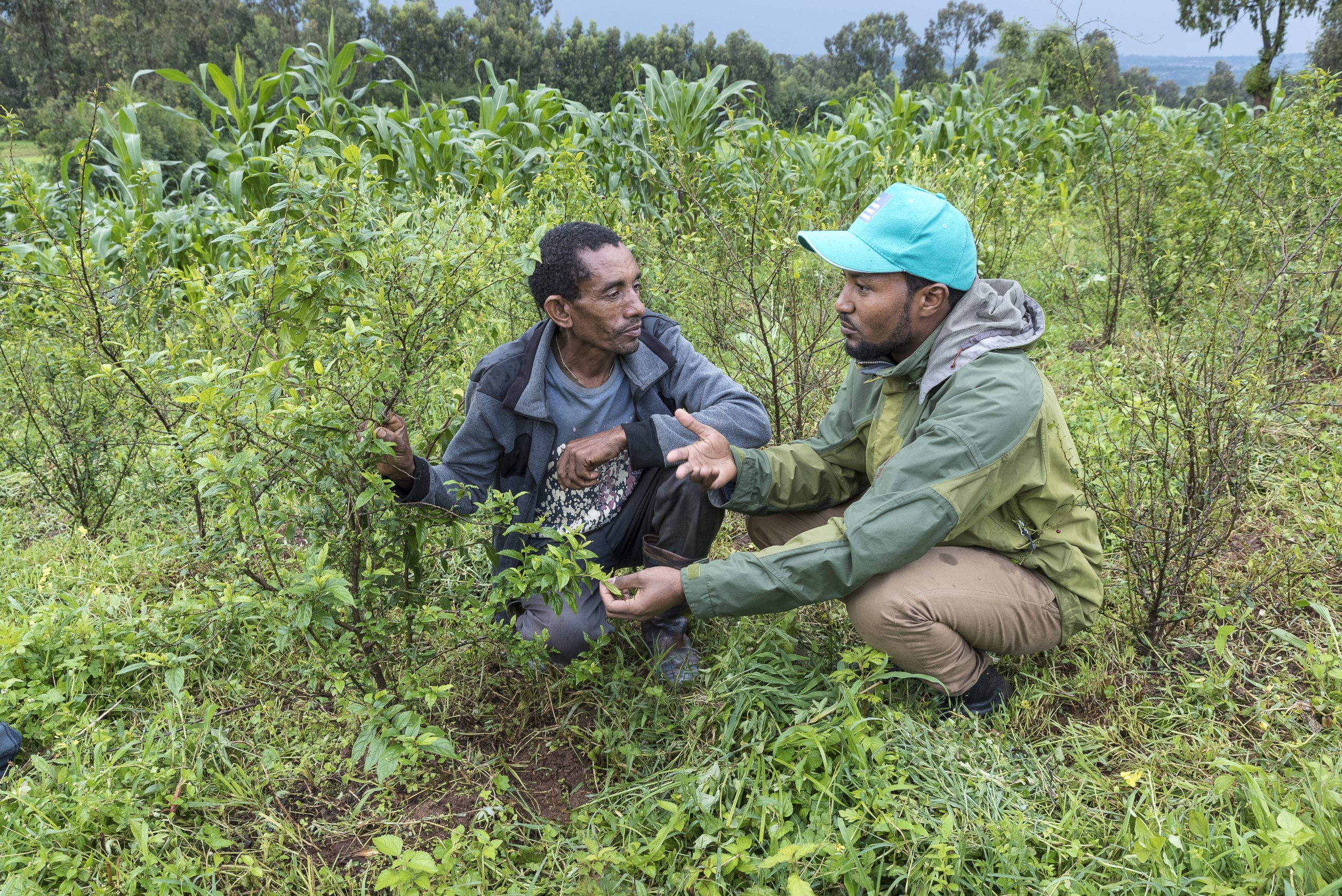
We began the project in Jabi Tehnan with a baseline study to map out the local challenges. Together with the community, we drew up a multi-year plan with self-reliance as its main goal. At the same time, WeForest assessed the soil erosion and the condition of the forest. Over the past few years, we have steadily expanded the project area. Depending on how severe the erosion is, trees are planted or areas are temporarily closed off and left undisturbed, so that the soil can recover through natural regeneration.
In 2025, working with communities and local authorities, nearly 68 hectares of Gewocha Forest and more than 119 hectares of degraded community land were restored and demarcated. Thirteen forest associations have been set up to support the management of these areas. The project nursery produced 371,991 seedlings of fourteen tree species. By the end of 2025, 351,662 seedlings had been planted in Gewocha Forest, on community land, at schools and churches, and on farmland. This improves vegetation cover, helps restore degraded land and strengthens the local ecosystem.
.
Healthy food and income.
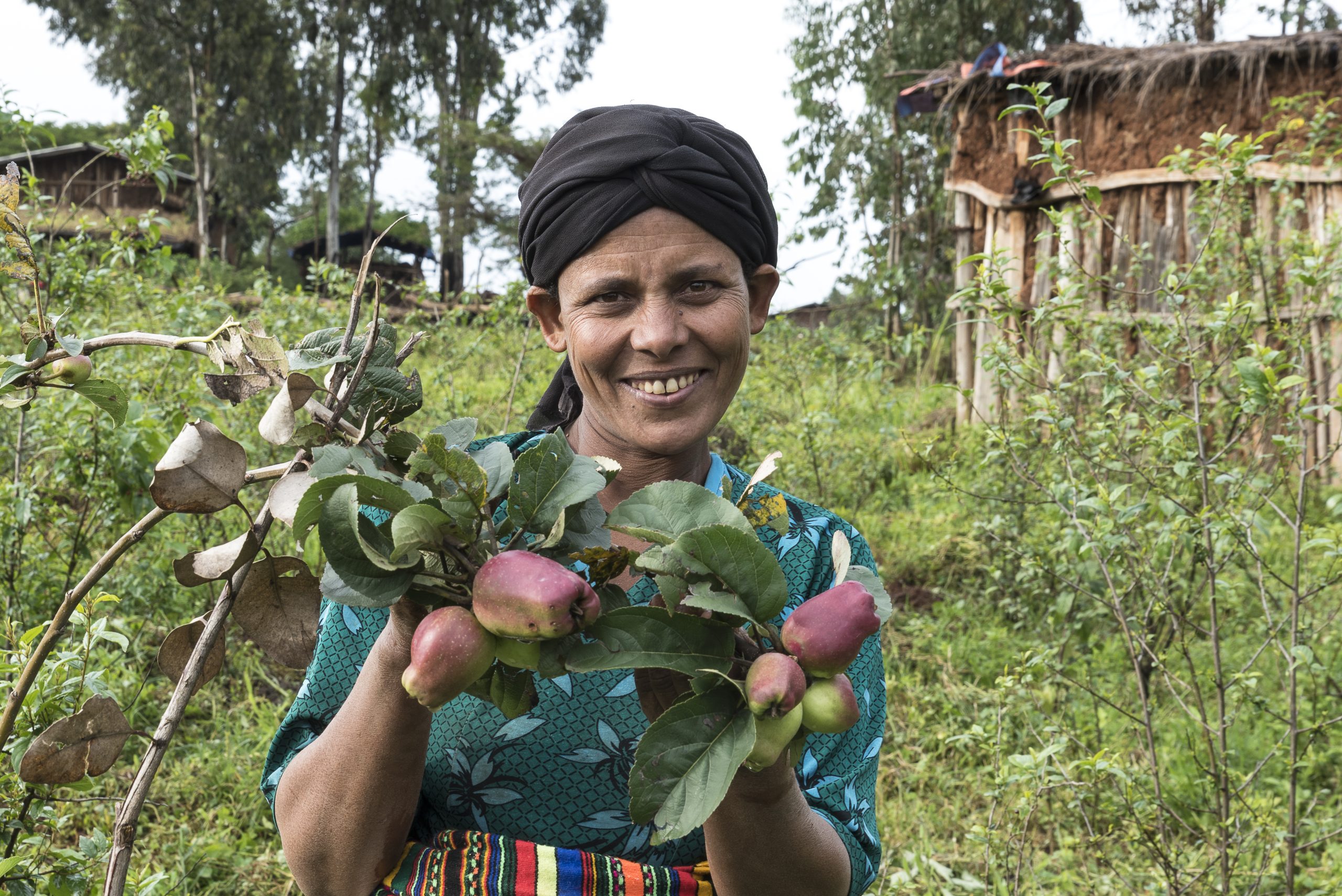
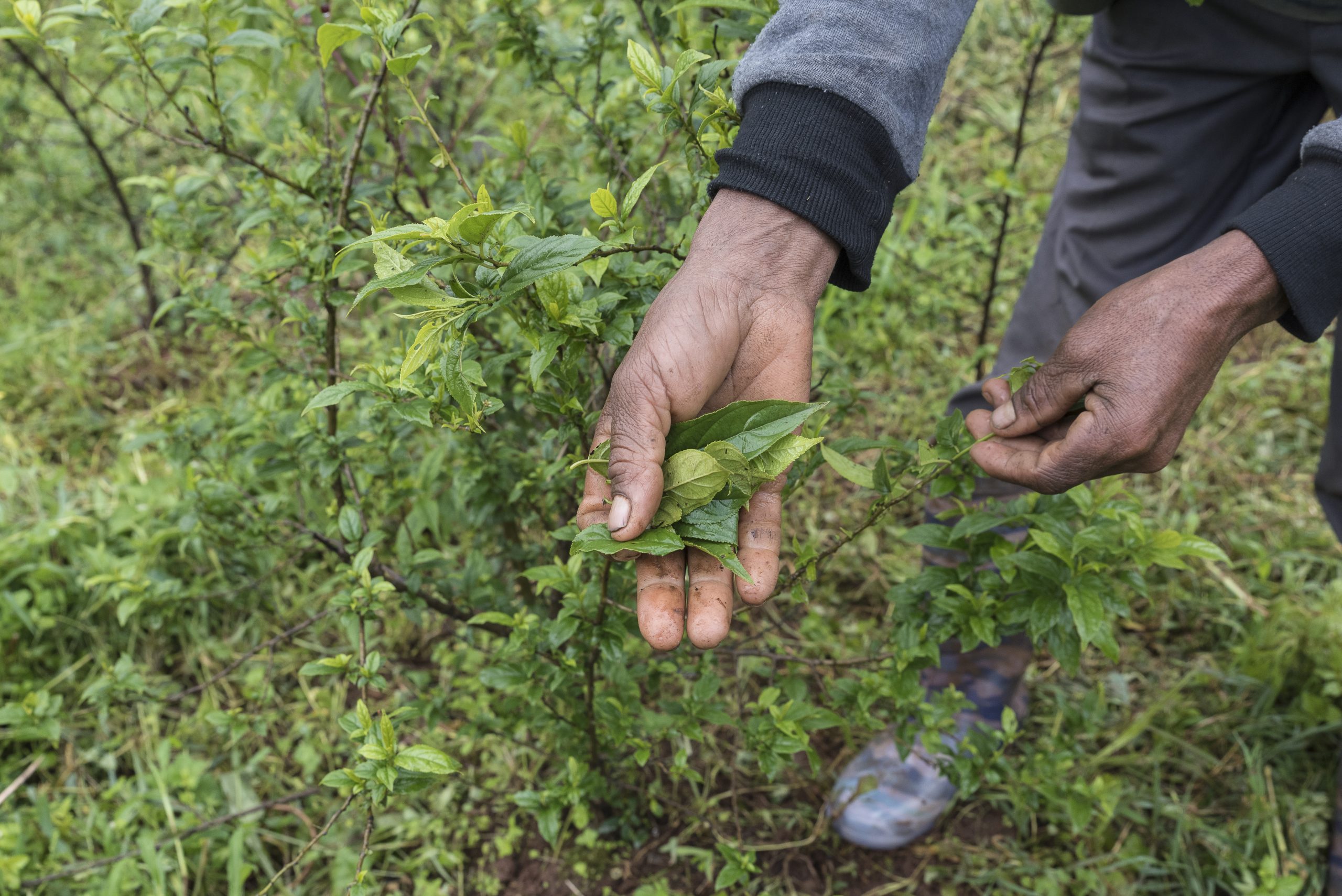
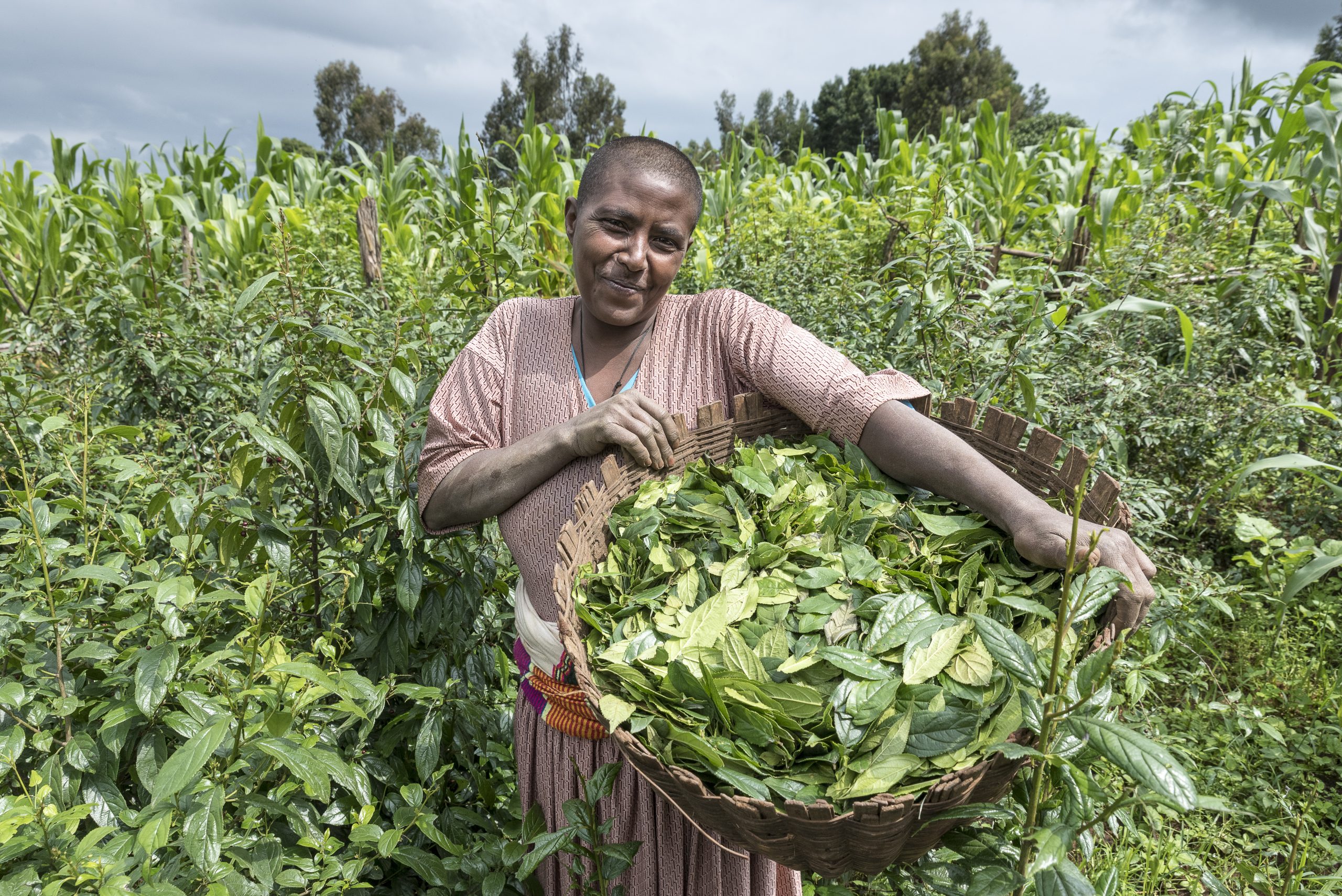
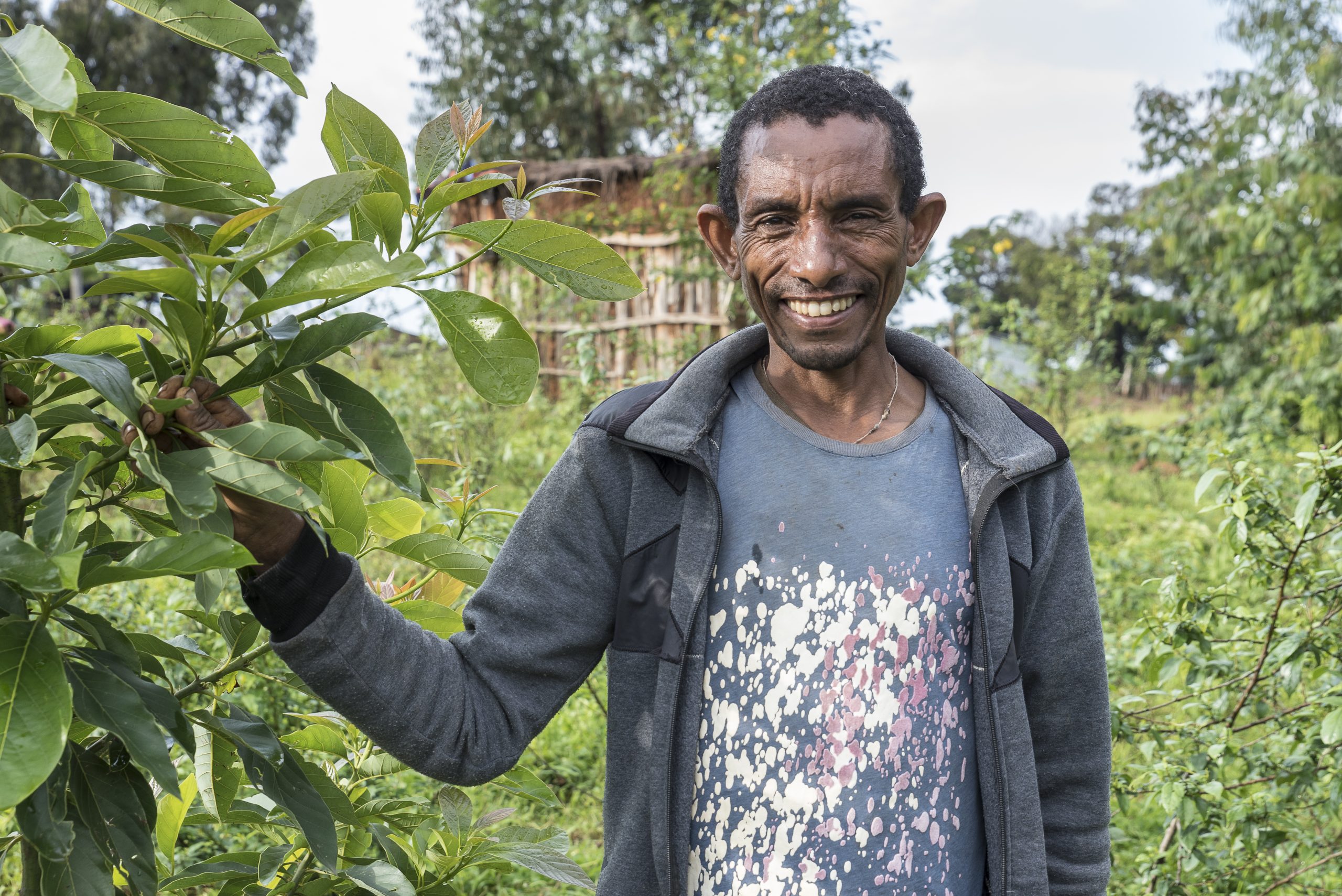
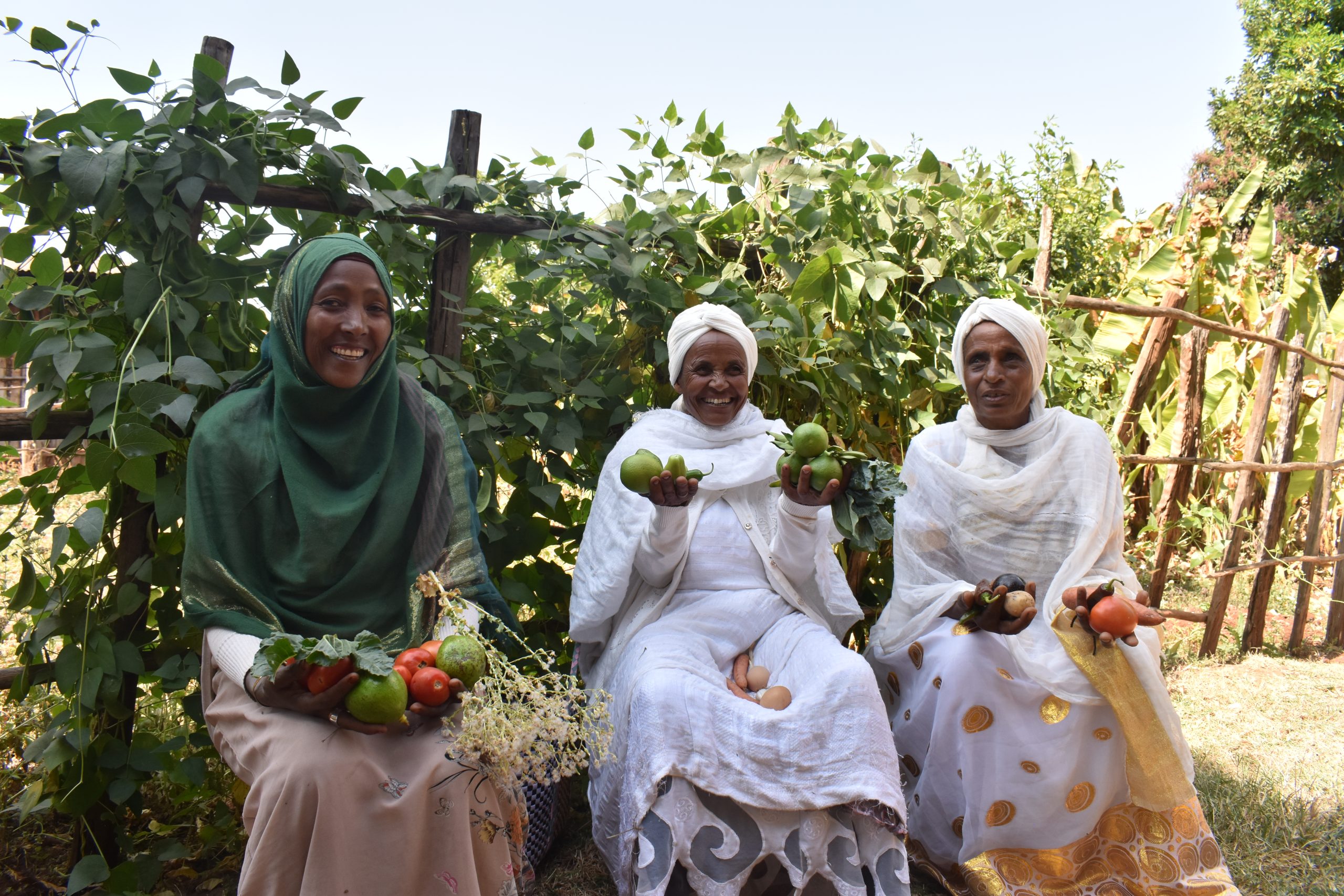
Food forests on farmers’ plots allow residents to grow healthy food and earn an income. More than 7,900 families are involved in the project’s activities. They learn which fruit trees bear fruit all year round, keep bees for honey, maintain food forests and make bricks for building houses. The harvest from the food forests is varied and highly nutritious, and any surplus vegetables, fruit or honey can be sold for extra income. Families also receive cookstoves for preparing food.
Because women and children are the most vulnerable in this area, it is important that our joint activities strengthen their position. Women now make up around 30% of the tree nursery workforce. With their new skills, they are strengthening their position within their communities. Even so, true equality requires a completely new way of thinking, and that takes a long time. We continue to work on this through trainings on women’s rights.
Progress.
Many areas in West Gojjam, where we have been working since 2017, have undergone a real transformation. Large dry gullies have given way to fresh green grass and fertile soil. Natural springs are emerging or returning: a wonderful gain for people and nature! Residents are learning to build check dams, so that heavy rain washes away less fertile soil and erosion is reduced. Newly planted trees help water seep gradually into the ground.
The families we work with are positive about how the project is developing. They are earning more, which means their children can go to school. And older people who cannot travel far to find work now earn an income from the trees in their gardens. Together, the villagers are working towards self-reliance, so that they can end hunger and poverty themselves and cope with the climate challenges of today and tomorrow. Working with their local government, they can build a thriving future for themselves and for nature.